
Speaker Cables for High-End Audio Systems and Interconnects
In a high-fidelity system, cables are crucial components that preserve the fragile signal passing between your electronics. Our focus is on specialized speaker cables and interconnects engineered for superior conductivity, low capacitance, and exceptional shielding. We eliminate noise and resistance to ensure the full dynamic range and clarity of your system are maintained, delivering a pristine signal that allows the music to emerge fully.
Featured Speaker Cables & Interconnects Brands
We work exclusively with manufacturers who prioritize the science of signal transmission, using high-purity conductors and proprietary geometric designs to elevate your system’s performance.

Analysis Plus
Renowned for their unique hollow oval geometry (a patented design) that minimizes the skin effect and ensures uniform signal flow across all frequencies.
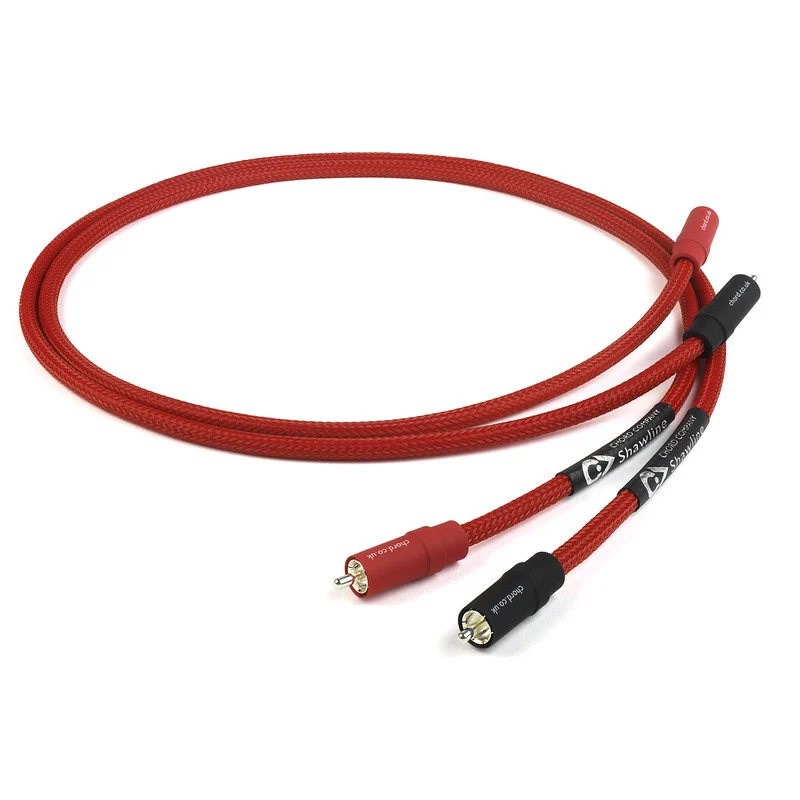
Chord Company
British design focused on superior shielding and conductor geometry, crafting speaker cables and interconnects for clean, dynamic signal transfer.
How to Choose the Right Speaker Cables for Your System
Choosing speaker cables starts with the connection between your amplifier and loudspeakers. The right cable depends on your system’s requirements, the distance between components, and the type of connections available.
Consider these factors before choosing:
- Cable length: Measure the actual distance from your amplifier to each speaker, allowing enough length for routing without excessive slack.
- Wire gauge: Longer runs and lower-impedance speakers can make cable resistance more significant. Choose a suitable gauge for your system rather than relying on price or appearance alone.
- Terminations: Check whether your amplifier and speakers use binding posts that accept banana plugs, spade connectors, or bare wire.
- System compatibility: Confirm the cable is suitable for your amplifier’s and speakers’ connection requirements.
- Installation: Consider how the cable will be routed around furniture, walls, and other equipment.
If you are unsure which cable is appropriate, our team can help you compare options based on your equipment and room layout.
How to Choose the Right Speaker Cables for Your System
Choosing speaker cables starts with the connection between your amplifier and loudspeakers. The right cable depends on your system’s requirements, the distance between components, and the type of connections available.
Consider these factors before choosing:
- Your listening space: Room size, layout, and speaker placement can influence which equipment is suitable.
- System compatibility: Amplifier power, speaker sensitivity, and impedance are important when matching components.
- Your music preferences: The qualities you value most may influence your choice of loudspeakers, amplification, and audio sources.
- Your existing equipment: An upgrade may involve one component rather than replacing your entire system.
Explore our equipment categories or contact In Living Stereo for guidance on selecting components for your listening needs.
Matching Speaker Cables with Your Amplifier and Loudspeakers
Speaker cables are one part of a connected audio system. When choosing a cable, consider the amplifier’s output connections, the loudspeakers’ input terminals, and the distance between them. A cable should provide a secure connection and an appropriate conductor size for the length of the run and speaker load.
The right choice is specific to your setup. Explore our high-fidelity loudspeakers and amplification components to see the equipment your speaker cables will connect.
Testimonials
What Our Customers Say
Posted on Google 

Alex U.
 Trustindex verifies that the original source of the review is Google.
The best stereo dealer in NYC, especially if you’re looking for analog equipment. Steve M. is down to earth and very easy to talk to. He is an industry veteran who really knows his stuff and is full of great advice and options no matter what your budget is.
Posted on Google

J-ray
Trustindex verifies that the original source of the review is Google. I first went to In Living Stereo in 2010 or so with a modest budget and walked away with a used Rega P5, new cartridge and a phone stage. Later I got Prima Luna integrated amp then Dynaudio Focus 350 floor standing speakers. Eventually, as time has gone by, I upgraded to a Leben 600x, Leben phonostage and Devore Super Nines.
As I built up my system bit by bit, Steve Mishoe and Steve Cohen have guided me to a place where I am truly satisfied. I can't thank them enough!
They have great taste and can work with any budget. I trust them implicitly and am thankful that a place like this is here in New York City.
Highly recommended!
Posted on Google

Larry Ginsberg
Trustindex verifies that the original source of the review is Google. I have been a faithful customer of In Living Stereo for over the last ten years and believe it is a must-visit even if you are not a hardcore audiophile.
First, hands down, the store has the best audio equipment in terms of sound realism, price, durability, and aesthetics. (Note that they don't carry video equipment.)
Second, the store is owned and operated personally by Steve M., whose knowledge and attention to detail are unmatched. Steve gives you personal attention, helping you select the best equipment in your price range that meshes and achieves the best collective sound possible. Importantly, Steve doesn't skimp on the details and matches, for example, speaker wires, interconnects, and sound conditioners to complement cartridges to turn tables.
Finally, Steve is an extremely nice and honest individual, singularly focused on making sure you're happy with your purchases for years to come.
As an added bonus, he listens to all types of music -- and is happy to audition the equipment with any music you bring.
Posted on Google

andrew lux
Trustindex verifies that the original source of the review is Google. My old amplifier shorted out and stopped working. Every amplifier I had since I was a kid was either a worn hand-me-down, or thrift store finds. I finally have enough money to invest in something nicer. I stoped by In Living Stereo, and Steve showed me a bunch of different options for an amplifier. He was was super helpful with all my questions.
I've never had a good Amplifier despite collecting records for over 20 years. I looked at getting a refurbished vintage amp, but found that most prices were the same as a new one. With Steve's help, I picked up the Rega Brio, and my records have never sounded so good. Even music streaming sounds so much better.
I highly recommend stopping by and talking stereo equipment. You never know just how good your collection can sound.
Posted on Google

Andrew Ludke
Trustindex verifies that the original source of the review is Google. It's audio nirvana at In-Living Stereo. You won't find a more knowledgable and passionate group to explore the sonic possibilities. I am blown away everytime I stop in to listen.
Posted on Google

Tanner Mahoney
Trustindex verifies that the original source of the review is Google. I walked into In Living Stereo as a beginner audiophile and was greeted by Steve who walked me through various speaker brands and educated me on buying high quality speakers. The store is amazing, a well curated selection and really cool listening rooms. He let me listen to a bunch of the high end speakers on the floor. He ended up giving me a great deal on a floor version of Dynaudio speakers, which are my first pair of high fidelity speakers. Steve was super helpful and FaceTimed me to help me set up the speakers at home. Highly recommend!
Posted on Google

Peter McCormick
Trustindex verifies that the original source of the review is Google. I purchased two great sounding systems - and learned a ton about hi-fi - from Steve over the years. It is a joy to listen to records on world class equipment at the In Living Stereo showroom.
Posted on Google

Tom
Trustindex verifies that the original source of the review is Google. I was looking for a turntable and a pair of speakers. Steve set up a couple of systems for me to listen to and I was able to compare them (Spendor and Devore speakers). He was knowledgeable and patient.
I also a got chance to listen to the G.I.P. horn speakers. It was like the musicians were in the room with me, they were truly amazing. Too bad G.I.P. is way outside of my price range. I had a great experience.
Posted on Google

A D
Trustindex verifies that the original source of the review is Google. Steve was very helpful in teaching me about stereos and what to look for in audio equipment.
I didn't have a huge budget but it sounded great, even better than I expected!
He showed me the Rega Planar 3 turntable and the Dynaudio bookshelf speakers.
Frequently Asked Questions About Speaker Cables in NYC
Choosing the right speaker cables involves understanding how technical factors like resistance, gauge, and length affect system performance. The following questions address common concerns when selecting cables for a high-end audio setup.
Yes, but mainly in terms of signal efficiency rather than dramatic tonal changes. Poorly matched cables can introduce resistance and reduce performance, while properly sized cables help maintain clarity and dynamics.
The correct gauge depends on cable length and speaker impedance. Thicker cables (lower AWG) are recommended for longer runs or lower-impedance speakers to reduce resistance and signal loss.
High-quality cables are important, but beyond a certain point, improvements become minimal. A well-built cable with the correct gauge and materials will deliver excellent performance without needing to invest in extremely high-priced options.
Speaker cables carry the amplified signal from an amplifier to passive loudspeakers. Interconnects carry lower-level audio signals between source components, preamplifiers, and other electronics. They serve different roles and are not interchangeable.
Using equal lengths is a practical approach for most stereo setups, especially when the amplifier is positioned between the speakers. If your room layout requires different lengths, choose suitable cable specifications for each run and keep the connections consistent.
The choice depends on the binding posts and connection preferences of your amplifier and speakers. Check that the connector is compatible with both components and can be secured properly.
Often, but not automatically. Check the new equipment’s terminals and requirements, as well as the cable’s length and gauge. If you are changing to a different system, confirm compatibility before reconnecting.
Get Started
The Essential Wiring Components
We organize our selection around the critical needs of any stereo equipment setup, using the right cable geometry and materials to minimize interference and resistance.